Glossary — Equine & Archery Terms That Build Better Leaders and Teams
Knowing the right words for horses and archery makes group work clearer, safer, and more effective. This glossary collects the terms we use in leadership and team-building sessions so your group can move from confusion to clear action. Read for key equine vocabulary, how horse behavior mirrors team dynamics, essential archery language, and how these ideas appear in Horse + Bow programs.
What are the key equine terms every beginner should know?
Horse language is the foundation for safe, confident work around animals; these basic terms keep everyone aligned and present.
What are the basic horse anatomy terms?
Participants commonly reference a few body parts during sessions.
- Shoulder: The area behind the head and just below the withers. When we stand here, we are in the “relationship zone.”
- Withers: The ridge above the shoulders used to measure height and fit tack.
- Hind end: The back side and hip of the horse. This is their power house. When activated, all the blood rushes to the rear and they load their hind end in preparation to flee. Also a danger zone for kicking.
Clear, shared terminology lets teams give precise instructions and report observations without confusion.
Which horse gaits and movements are commonly used?
Recognizing gaits can be helpful in describing how a horse is moving.
- Walk: A steady four-beat gait — calm and predictable.
- Trot: A two-beat diagonal gait — often used for training and increased engagement.
- Canter/Lope: A three-beat gait — smoother and faster than a trot.
- Gallop: The fastest four-beat gait — typically seen in high-speed work or play.
How does understanding horse behavior enhance team building?
Horses are social, honest, and present; their responses offer immediate, nonjudgmental feedback that teaches influence, trust, and clarity.
What are common equine communication cues?
Horses use simple signals we can learn to read; attending to those cues sharpens observation and teamwork.
- Ear position: Shows attention and mood — ears forward, relaxed, or pinned back each communicate different intent.
- Body language: Posture and movement reveal comfort, tension, or curiosity.
- Vocalizations: Nickers, whinnies, and snorts can indicate greeting, stress, or relaxation.
Teams that learn these signals improve nonverbal communication and reduce misunderstandings.
How do herd dynamics relate to leadership development?
Herds form roles and expectations naturally; observing those dynamics yields transferable lessons for human teams.
- Herd hierarchy: Roles emerge naturally — understanding them helps define group responsibilities.
- Feedback mechanisms: Horses reply instantly to how they’re led, providing candid feedback on presence and approach.
- Social learning: Horses learn from each other — groups can model behavior to encourage change.
Studying herd behavior helps leaders test influence, build trust, and refine how they show up for others.
Research supports how equine interactions strengthen leadership presence and team cohesion.
Equine leadership development for communication & teamwork
Using horses in leadership work is an emerging practice that shows promise for building communication and teamwork skills through real-time, experiential feedback.
Leadership interaction skill development through equine experiences, 2019
What are the essential archery terms for beginners and teams?
Archery builds focus, composure, and measurable progress; learning the vocabulary supports safe practice and clear coaching.
What are the main parts of a bow and arrow?
Knowing basic equipment terms helps teams discuss technique and safety with confidence.
- Limb: The flexible arms of the bow that store energy when drawn.
- String: The cord connecting the limbs that launches the arrow.
- Nock: The notch at the arrow’s end that clips onto the string.
Familiarity with parts speeds coaching and reduces equipment confusion during practice.
Which archery techniques improve focus and decision-making?
Archery trains attention and composure — habits that translate directly into clearer teamwork and better choices.
- Anchor point: A consistent facial reference for aim and repeatability.
- Follow-through: Maintain posture and focus after release to improve consistency.
- Breath control: Use breath to steady the body and remain calm under pressure.
These habits support steadier performance on the range and at work.
Developing archery skills builds mental resilience and technical precision useful beyond sport.
Archery skill development: mental, technique, and life skills
Factors that shape success for young archers include mental preparation, solid shooting technique, and broader life skills — all of which support long-term development.
Key Factors Influencing Performance and Talent Development in Youth–Comparison with the Finnish Archery Junior National Team, 2023
How do glossary terms connect to Horse + Bow’s programs?
Every term here reflects how we design sessions: clear language, shared expectations, and measurable learning that map directly to participant outcomes.
How is equine communication applied in corporate team building?
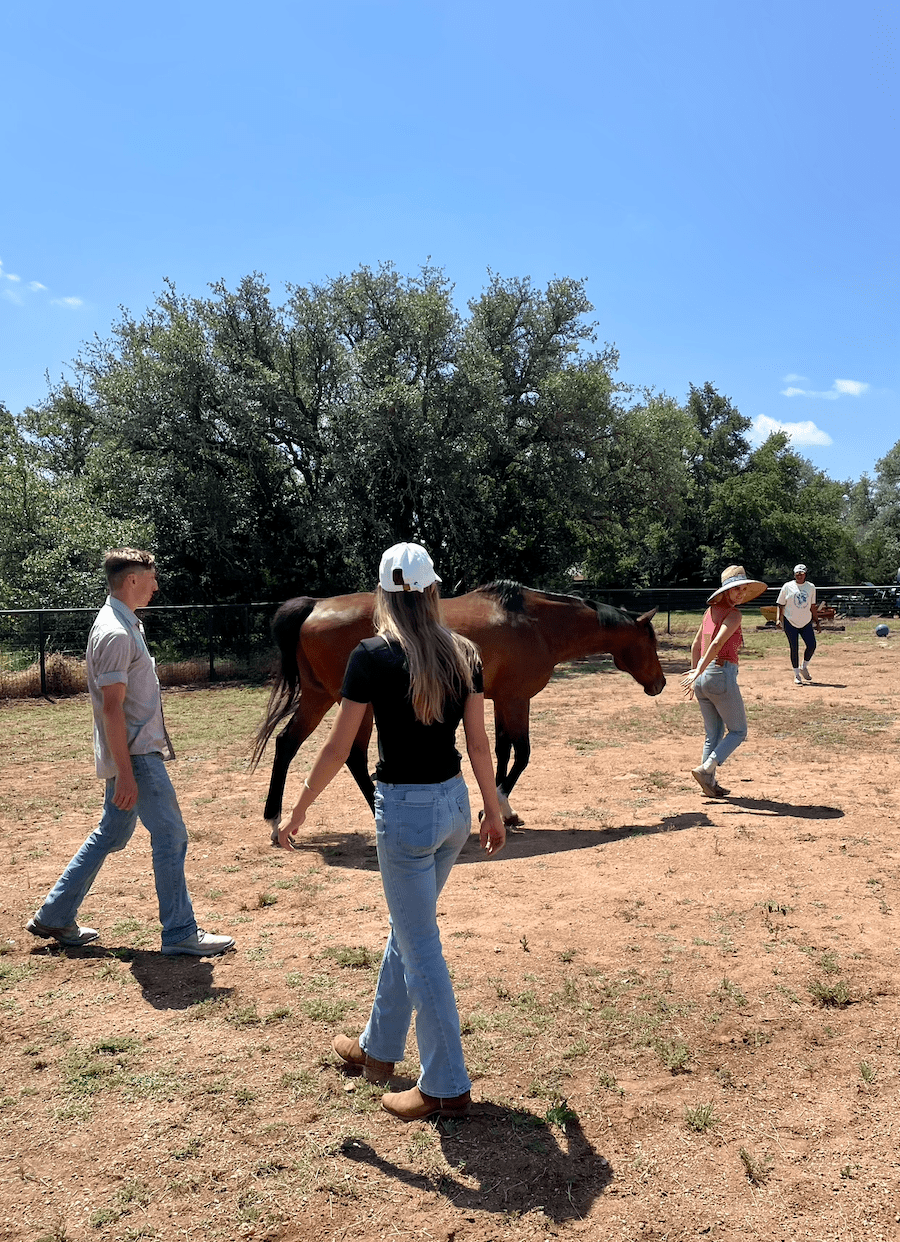
Horses make team dynamics visible; participants practice presence, clarity, and trust through guided activities with horses.
- Enhance communication skills: Horses mirror nonverbal cues, helping teams refine how they send and receive messages.
- Build trust: Low-stakes, high-impact exercises create opportunities to earn and give trust.
- Develop leadership qualities: Participants receive immediate feedback on influence, boundaries, and regulated authority.
Those lessons translate into clearer collaboration and stronger team performance.
Studies highlight the measurable benefits of equine-assisted learning for relationships and team development.
Equine assisted learning for relationship & team building
Research shows equine-assisted learning (EAL) can effectively develop relationship skills and team-building capabilities through structured, experiential workshops with horses.
Addressing the needs of the millennial workforce through equine assisted learning, 2016
Where does archery vocabulary enhance leadership and mindfulness?
Archery supplies teams with a common language for focus, patience, and measurable progress.
- Mindful practice: Encourages present-moment awareness and steady attention.
- Leadership development: Precision and decision-making on the range transfer to clearer choices in teams.
- Team cohesion: Shared goals and vocabulary build mutual support and accountability.
Combined, archery and equine work offer complementary paths for individual and team growth.
Frequently Asked Questions
What benefits does equine-assisted learning offer for team dynamics?
EAL strengthens teams by improving nonverbal communication, building trust, and creating immediate feedback loops where participants can practice new behaviors safely.
How can archery improve focus and concentration in teams?
Archery trains attention, breath control, and routine, helping individuals center themselves and deliver consistent performance under pressure; teams often report clearer focus and steadier decision-making.
What role does feedback play in equine-assisted leadership development?
Feedback is central: horses give fast, honest responses to people’s energy and behavior, accelerating self-awareness and practical change in leadership presence.
How does understanding horse behavior translate to human interactions?
Horses are keen readers of body language. Observing and responding to them makes people more aware of their nonverbal signals and better at reading others, improving empathy and teamwork.
What are the key differences between individual and team archery practices?
Individual practice builds technique, consistency, and personal goals; team practice emphasizes shared strategy, mutual support, and collaborative problem-solving.
How can organizations implement equine-assisted learning in their training programs?
Partner with certified facilitators, start with a needs assessment, set measurable outcomes, and choose activities that match your team’s development stage to ensure learning transfers back to work.
Conclusion
Learning the language of horses and bows gives teams a shared framework for better communication, trust, and focus. These terms are practical tools we use to create meaningful change; to explore how they can lift your team, learn more about Horse + Bow’s programs and hands-on offerings.