Executive coaching can be valuable. A CEO gets a confidential space to work through difficult decisions, a new leader develops confidence, or an executive improves how they communicate and lead.
But what happens when the problem isn’t one leader? What if the entire leadership team struggles to work together?
Maybe department heads operate in silos. Decisions keep coming back to the CEO. Difficult conversations happen after meetings instead of during them. Leaders agree on priorities in the conference room but fail to follow through once they return to their departments.
In these situations, individual executive coaching may not be enough. The challenge is not simply how each person leads. It is how the team functions together.
If you’re looking for alternatives to traditional executive coaching for an entire leadership team, several approaches can help. The best choice depends on what is getting in the way of your team’s effectiveness and what needs to change.
Why Individual Executive Coaching Isn’t Always Enough
Traditional executive coaching typically focuses on an individual’s goals, leadership behavior, decision-making, and professional development. That can be exactly what a leader needs.
However, individual coaching has limitations when the underlying challenge involves relationships and patterns across an entire team.
Consider a few common scenarios.
The CEO is the bottleneck. Every significant decision requires the CEO’s approval. Other executives hesitate to act independently, and the CEO feels responsible for solving every problem.
Department heads don’t work well together. Each leader advocates for their own function, but nobody takes responsibility for the organization’s overall priorities.
The team avoids difficult conversations. Leaders privately disagree but publicly maintain the appearance of alignment. Problems surface too late, when the cost of resolving them is much higher.
The team struggles with change. Leaders communicate different messages, resist new responsibilities, or revert to familiar ways of working when pressure increases.
In each case, coaching an individual may help. But the team also needs opportunities to examine its shared behaviors, address underlying tensions, and establish new ways of working together.
The following alternatives offer different ways to do that.
1. Team Coaching
Team coaching focuses on how a leadership team operates as a collective. Rather than concentrating exclusively on individual development goals, a coach helps the group examine its relationships, communication patterns, decision-making, and shared accountability.
Sessions might explore how the team handles conflict, whether members challenge one another constructively, and how the group makes decisions when there is disagreement.
Best for: Leadership teams that need to improve trust, communication, accountability, or their ability to work toward shared goals.
What to consider: Team coaching requires honest participation. If leaders are unwilling to discuss difficult issues openly, progress may be limited. Some teams also need help addressing immediate strategic or operational decisions, not just improving their relationships.
Team coaching is often a natural next step when individual coaching has helped leaders develop personally but the team’s collective performance has not improved enough.
2. Facilitated Leadership Team Workshops
A facilitated workshop brings leaders together to work through a specific business or organizational challenge with the help of a neutral facilitator.
Unlike a traditional training session, a well-designed workshop focuses on the team’s actual circumstances. The facilitator structures the discussion, helps participants surface disagreements, and guides the group toward decisions and next steps.
Topics might include strategic alignment, delegation, decision rights, cross-functional collaboration, or the leadership team’s approach to organizational change.
Best for: Teams facing a defined challenge that requires discussion, alignment, and concrete decisions.
What to consider: A workshop can produce a useful plan without necessarily changing the behaviors that caused the problem. If a team repeatedly agrees on the right actions but struggles to follow through, it may need ongoing coaching or an experiential approach alongside the workshop.
3. Experiential Leadership Development
Experiential leadership development gives people an opportunity to observe their behavior in action rather than simply discuss leadership concepts.
Participants work through structured challenges that require communication, coordination, decision-making, and collaboration. A facilitator then helps them examine what happened and connect those observations to real workplace situations.
For example, a team may discover that several leaders try to direct the same task, that nobody clarifies who owns the next step, or that people stop contributing when a dominant voice takes over.
These observations can create a starting point for conversations that are difficult to initiate in an ordinary meeting.
Best for: Teams that understand leadership concepts intellectually but need to recognize how their own habits affect their collective performance.
What to consider: An activity is not automatically a leadership development experience. The challenge must be appropriate to the team’s goals, and the facilitator must connect the experience to practical workplace behavior. Enjoyment alone is not evidence of organizational improvement.
Experiential learning can be particularly useful when a leadership team is stuck in familiar conversations and needs a different way to examine its behavior.
4. Horse-Assisted Leadership Development
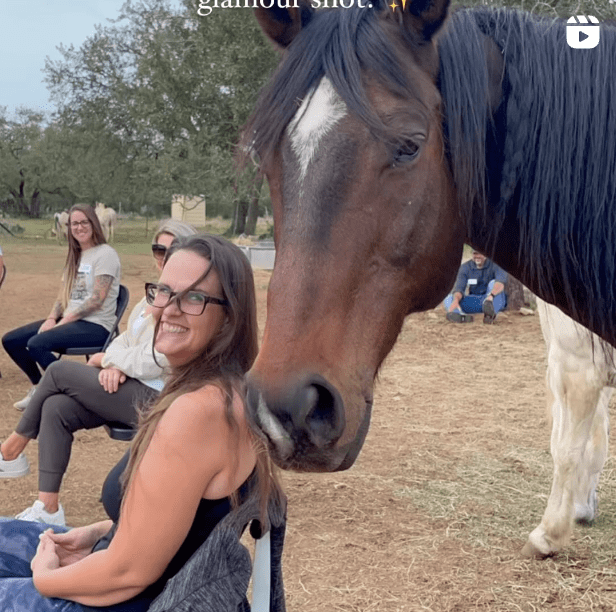
Horse-assisted leadership development is one form of experiential learning. It uses facilitated, ground-based interactions with horses to help participants examine communication, awareness, boundaries, influence, and responses to uncertainty.
Horses respond to changes in human movement, attention, and behavior. During structured exercises, participants can observe how their approach affects an interaction and consider what that reveals about their leadership habits.
For example, a leader who relies on giving more instructions when a task becomes difficult may discover that additional direction does not necessarily improve the interaction. Another may recognize that they are so focused on achieving an outcome that they stop paying attention to what is happening around them.
With skilled facilitation, these moments can lead to useful questions:
- Am I paying attention to the situation, or simply pushing toward my preferred outcome?
- Do I communicate clearly enough for others to understand what I need?
- How do I respond when I cannot control every variable?
- When should I lead, and when should I give someone else room to contribute?
- What happens to my behavior when the pressure increases?
Best for: Leadership teams that want a hands-on way to explore communication, trust, self-awareness, delegation, and collaboration outside their normal work environment.
What to consider: Horse-assisted learning is not a fit for every team or every objective. Choose a qualified facilitator who can explain the program’s safety practices, accommodate participant needs, and connect the exercises to specific organizational challenges. Ground-based programs do not require riding experience.
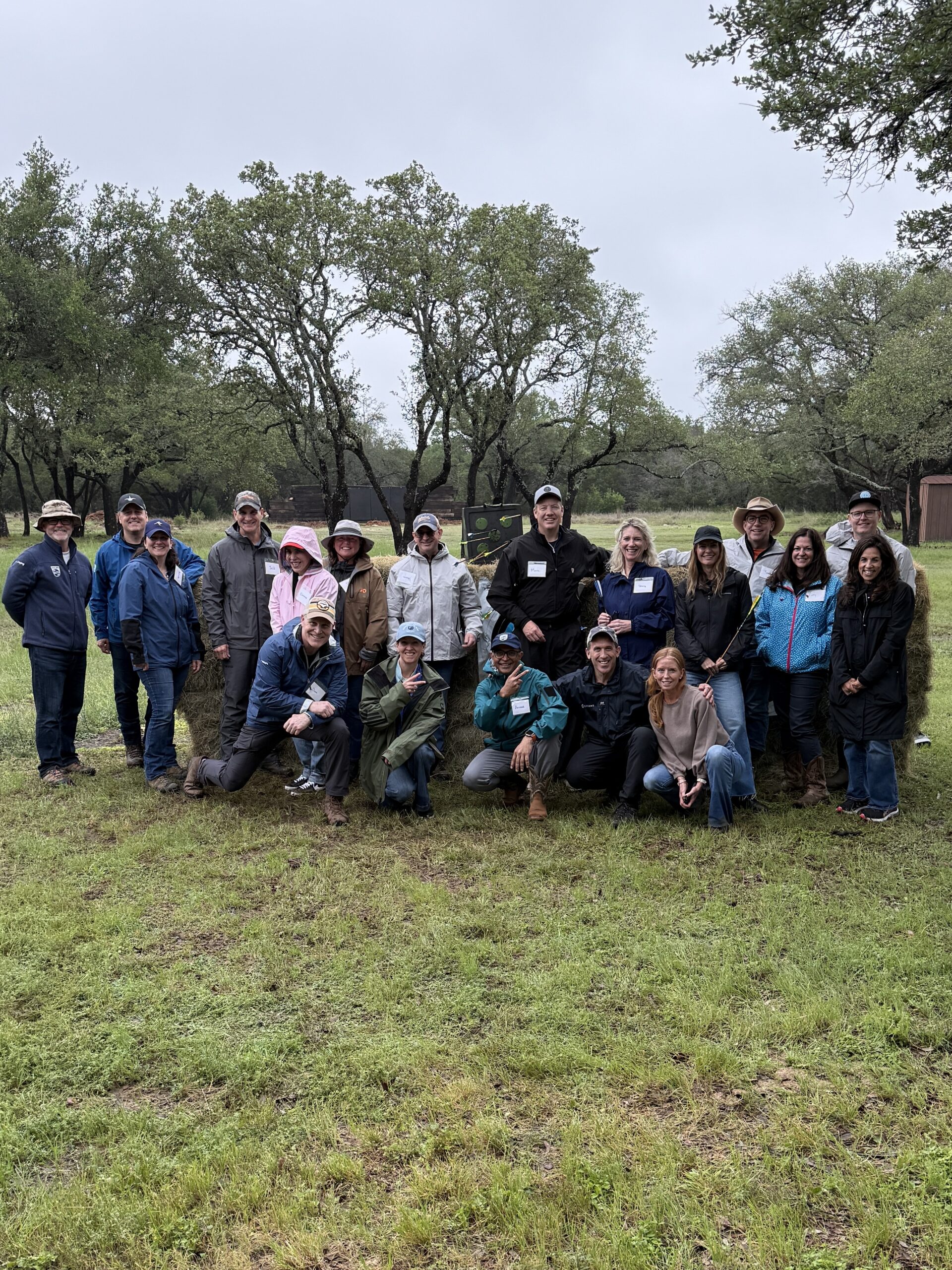
At Horse + Bow, in the Texas Hill Country near Marble Falls, facilitated horse experiences give leadership teams opportunities to observe their behavior in real time and reflect on how those patterns show up at work.
The horses are not there to diagnose people or provide a magical solution to team conflict. They are part of a structured learning experience designed to help leaders notice, discuss, and reconsider their behavior.
5. Executive Retreats With Structured Leadership Development
An executive retreat creates dedicated time away from the daily demands of running an organization.
A retreat can include strategy discussions, team coaching, facilitated workshops, experiential learning, or a combination of these approaches.
The advantage is that the team can address both the business and the human dynamics involved in executing its strategy.
For example, leaders might spend the morning discussing organizational priorities, participate in a facilitated team experience, and then return to the strategy with a better understanding of how they communicate and make decisions together.
Best for: Teams navigating significant change, preparing for a new strategy, integrating departments, or needing uninterrupted time to address persistent leadership challenges.
What to consider: A change of scenery does not guarantee a change in behavior. Start with clear objectives and choose a facilitator who can connect the retreat agenda to those objectives. Build in time for decisions, accountability, and follow-up.
6. Leadership Simulations and Business Simulations
Simulations give leaders an opportunity to practice decision-making in a controlled environment. They may involve a fictional business scenario, a crisis, competing priorities, limited resources, or a rapidly changing set of circumstances.
Participants must interpret information, communicate with one another, allocate resources, and make decisions under pressure.
The facilitator can then help the group examine how it handled uncertainty, disagreement, leadership responsibilities, and competing objectives.
Best for: Teams that need to practice decision-making, crisis response, strategic thinking, or coordination across functions.
What to consider: A simulation is most valuable when the scenario reflects challenges the team actually faces. Generic activities can feel disconnected from the organization’s needs, so ask how the exercise will be debriefed and applied to your business.
7. Peer Advisory Groups and Executive Learning Groups
Sometimes leaders need more than a facilitator-led intervention. They need an ongoing environment where they can discuss difficult decisions, challenge assumptions, and learn from other experienced leaders.
Peer advisory groups bring executives together to share challenges and perspectives. Depending on the format, these groups may be internal to an organization or made up of leaders from different companies.
Best for: Executives who need ongoing perspective, accountability, and exposure to different ways of approaching leadership challenges.
What to consider: Peer groups can be excellent for individual reflection and learning, but they may not directly address the relationships and working patterns inside one particular leadership team. An internal team with serious conflict may need direct facilitation as well.
How to Choose the Right Alternative
The most useful approach depends on the problem you are trying to solve. There is no single method that works best for every leadership team.
| If your primary challenge is… | Consider… |
|---|---|
| Individual leadership effectiveness | Executive coaching |
| Trust, communication, and team dynamics | Team coaching |
| A specific disagreement or strategic decision | Facilitated leadership workshop |
| Familiar behaviors that the team struggles to recognize | Experiential leadership development |
| Communication, awareness, and responses to uncertainty | Horse-assisted leadership development |
| Organizational change or strategic realignment | Executive retreat combining several approaches |
| Crisis response and coordinated decision-making | Leadership simulation |
| Ongoing perspective and accountability | Peer advisory group |
These approaches can also complement one another. For example, a team might use an experiential workshop to surface patterns, team coaching to work through those patterns over time, and individual coaching to help specific leaders develop new habits.
The goal is not to choose the most unusual program. It is to select the approach that addresses the actual problem.
Questions to Ask Before Investing in a Leadership Development Program
Before booking a provider, consider these questions:
What specific problem are we trying to solve?
Identify the behaviors or outcomes that need to change. “Better teamwork” is a starting point, not a complete objective.
Does the whole team need to participate?
If the challenge involves cross-functional relationships or shared decision-making, working with the entire leadership team may be more effective than coaching individuals separately.
How will we know whether the program was useful?
Define observable indicators of progress. These might include clearer decision ownership, faster resolution of disagreements, better handoffs, or fewer routine decisions being escalated to the CEO.
How will the learning transfer to work?
Ask how the facilitator will help participants turn observations into commitments, and how the organization should follow up after the program.
Does the facilitator understand our business context?
Leadership development should be relevant to the decisions, pressures, and responsibilities participants face. Ask how the provider prepares for the engagement and adapts the experience to your goals.
Why the Leadership Team’s Behavior Matters
A leadership team can be made up of talented, experienced executives and still struggle to function effectively.
The problem is often not a lack of individual capability. It is the interaction between those capabilities: how leaders communicate, share responsibility, handle disagreement, and respond when circumstances change.
That is why developing the team as a team matters.
When leaders can recognize their own patterns, understand their effect on colleagues, and take responsibility for how they work together, they have a stronger foundation for making decisions and navigating uncertainty.
The right intervention creates an opportunity to examine those patterns and practice something different. The real test is what changes once everyone returns to work.
Explore Experiential Leadership Development at Horse + Bow
Horse + Bow provides facilitated, ground-based horse experiences for leadership teams in the Texas Hill Country near Marble Falls, between Austin and Horseshoe Bay.
Our programs are designed for organizations that want to move beyond talking about leadership and give their teams opportunities to observe communication, decision-making, influence, and collaboration in action.
Through structured experiences and facilitated reflection, leaders can examine how they approach challenges, how they respond to others, and where their usual ways of working may be helping or hindering the team.
Horse + Bow is particularly suited to leadership teams interested in improving trust, delegation, communication, and their ability to navigate change.
If you are considering alternatives to traditional executive coaching for your leadership team, we can discuss your goals and whether an experiential program would be a useful fit.
Planning a leadership development experience for your team?
Visit Horse + Bow to learn more about corporate leadership development and inquire about a facilitated team experience.