Executive team offsites are designed to improve alignment, communication, and execution. But many fail to deliver lasting results. Teams leave with ideas, notes, and good intentions and yet within weeks, the same challenges resurface:
- misalignment across functions
- unclear ownership
- slow or inconsistent execution
- tension that never quite gets addressed
So why do executive team offsites fail? And more importantly, what actually works?
Why Executive Team Offsites Fail (Quick Answer)
Most executive team offsites fail because:
- they rely on passive discussion instead of real-time experience
- they don’t expose how teams actually operate under pressure
- they lack meaningful feedback in the moment
- they fail to translate insight into behavior change
To be effective, executive team offsites must move beyond conversation and into experiential, real-time leadership development.
The Real Problem with Most Executive Team Offsites
Traditional executive offsites are built around:
- presentations
- facilitated discussions
- personality frameworks
- strategic planning sessions
While valuable, these approaches share a core limitation:
They are passive.
They talk about alignment, but don’t test alignment.
They discuss communication, but don’t reveal where communication breaks down.
They define ownership, but don’t show what happens when ownership becomes unclear in real time.
As a result, many leadership offsites feel productive—but fail to create meaningful change.
Where Leadership Teams Actually Break Down
In complex organizations—especially in healthcare—executive teams tend to struggle in predictable ways:
1. Handoffs Between Teams Break Down
Work moves across functions, but the objective gets diluted or lost.
Everyone assumes alignment.
No one verifies it.
2. Shared Ownership Without Clear Accountability
Multiple leaders are involved, but no one is truly accountable.
Progress stalls when clarity is missing.
3. Communication Fails Under Pressure
In calm environments, communication feels strong.
Under pressure:
- assumptions increase
- clarity decreases
- alignment slips
4. Misalignment Stays Hidden
In a conference room, teams can appear aligned.
But that alignment should be tested under:
- time constraints
- ambiguity
- changing conditions
It looks good, until the moment comes when it really matters.
Why Traditional Leadership Offsites Don’t Fix This
These breakdowns don’t show up clearly in conversation.
They show up in behavior.
And behavior only becomes visible when:
- there’s movement
- there’s pressure
- there’s interdependence
Without those elements, executive team offsites remain theoretical.
That’s why many leadership retreats fail to improve real-world execution.
What Actually Works: Experiential Executive Team Offsites
The most effective executive team offsites are built around experiential leadership development.
Instead of talking about team dynamics, leaders:
- experience them
- observe them
- adjust them in real time
This approach aligns with principles of Kinesthetic learning—where learning happens through doing, not just discussing.
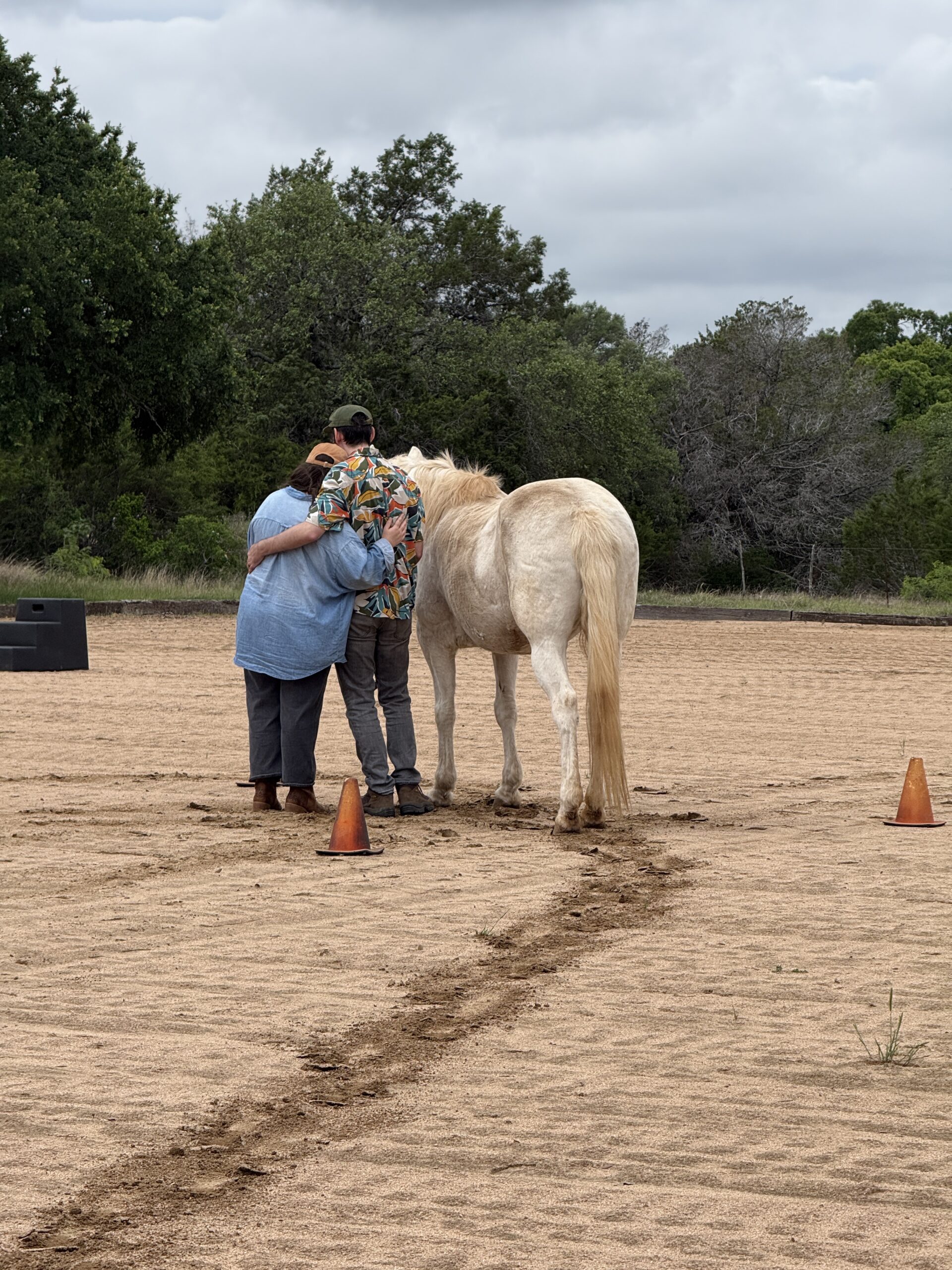
This is where experiential formats—such as facilitated, real-time leadership exercises involving dynamic environments like working with horses or precision-based activities like archery—become powerful.
These environments introduce movement, pressure, and interdependence, making leadership dynamics immediately visible.
At Horse + Bow, executive teams move through a series of progressively designed experiences where communication, handoffs, and shared ownership are tested in real time—often revealing patterns that are difficult to see in a traditional setting.
What High-Impact Executive Team Offsites Do Differently
1. They Make Team Dynamics Visible
Instead of guessing where breakdowns happen, teams can see:
- where communication fails
- where ownership gets lost
- where trust breaks down
There’s no ambiguity—only clarity.
2. They Provide Real-Time Feedback
Teams don’t wait for a post-event recap.
They reflect in the moment:
- What just happened?
- Where did we lose alignment?
- Who owned that outcome?
This accelerates learning and adjustment.
3. They Build a Learning Arc Throughout the Day
Effective executive team offsites are not a series of disconnected activities.
They are intentionally designed to progress:
- early moments reveal baseline dynamics
- middle moments introduce complexity and pressure
- later moments reinforce trust, alignment, and execution
This creates compounding insight.
4. They Translate Insight Into Behavior
The goal is not awareness alone.
It’s behavior change.
Because teams experience breakdowns firsthand, they are more likely to:
- clarify ownership
- improve handoffs
- strengthen communication
- hold each other accountable
Why This Matters for Healthcare Leadership Teams
Healthcare organizations operate in highly complex environments:
- cross-functional dependencies
- high-stakes decisions
- constant change
In this context, small breakdowns in alignment or communication can have outsized impact.
That’s why healthcare leadership teams benefit most from experiential executive team offsites that reflect real-world dynamics.
How to Plan an Executive Team Offsite That Actually Works
If you’re planning an executive team offsite, ask:
- Will this experience reveal how our team operates under pressure?
- Will we see real-time breakdowns in communication and ownership?
- Is the day designed as a progression, or a series of disconnected sessions?
- Will this translate into how we work together afterward?
If not, the offsite may feel valuable—but won’t create lasting change.
A Better Approach to Executive Team Offsites
At Horse + Bow, executive team offsites are designed around one principle:
You can’t change what you can’t see.
Through a series of facilitated, experiential exercises—including work with horses and mindfulness-based archery—teams are placed in dynamic, real-time environments where leadership patterns naturally emerge.
These experiences are intentionally designed to:
- surface breakdowns in communication and handoffs
- clarify ownership under pressure
- build trust through shared challenge and success
The result is not just insight—but a shift in how the team operates together back at work.
Final Thought
Most executive team offsites fail not because they lack effort—but because they never truly challenge how a team operates.
The most effective executive team offsites create an environment where:
- patterns are visible
- assumptions are tested
- alignment is earned, not assumed
That’s where real change begins.
An effective executive team offsite creates real-time visibility into team dynamics, provides immediate feedback, and translates insight into behavior change—not just discussion.
Leadership offsites fail when they rely too heavily on passive formats like presentations and discussions, without exposing how teams operate under pressure. Instead, incorporate experiential learning to practice new behaviors in real time.
Experiential leadership development is a hands-on approach where leaders learn through real-time experience, reflection, and application rather than theory alone.
For example, some executive team offsites use dynamic, facilitated environments—such as equine-assisted exercises or precision-based activities like archery—to surface leadership behaviors under pressure.
These experiences make patterns like communication breakdowns, unclear ownership, and misaligned execution immediately visible.
At Horse + Bow, this approach is used to help executive teams improve alignment, trust, and decision-making in a way that directly translates back to their day-to-day work.
Alignment improves when teams can clearly see breakdowns in communication, ownership, and decision-making—and address them in real time. This can be accomplished on an executive team offsite through professionally facilitated team challenges focused on building alignment.
Executive retreats can be highly valuable when designed to create meaningful insight and behavior change. Without that, they often fail to produce lasting results but typically still deliver a fun time!